
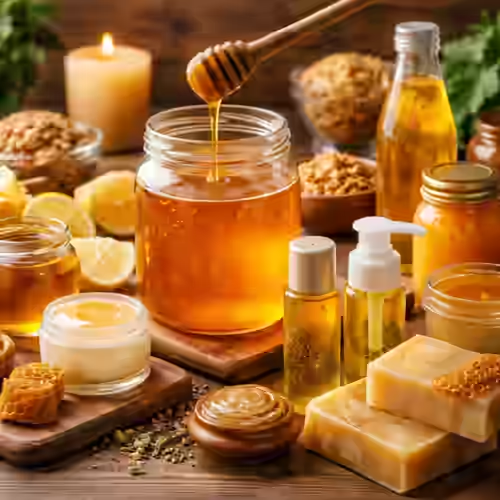
When most people think of honey, they picture a jar on the breakfast table, drizzled over pancakes or stirred into tea. But this golden nectar has been quietly revolutionizing industries far beyond the kitchen. From cosmetics factories to pharmaceutical laboratories, honey is emerging as one of nature’s most versatile industrial ingredients—and Filipino entrepreneurs are perfectly positioned to capitalize on this sweet opportunity.
Beyond the Jar: Honey’s Industrial Revolution
Honey isn’t just food anymore. Its unique chemical composition—a complex blend of natural sugars, enzymes, antioxidants, and antimicrobial compounds—makes it invaluable across multiple manufacturing sectors. While the global honey market continues to grow, savvy business owners are discovering that the real profit lies not in selling raw honey alone, but in understanding and leveraging its industrial applications.
The Food Production Powerhouse
In commercial food manufacturing, honey serves multiple functions that artificial ingredients struggle to replicate. As a natural humectant, it keeps baked goods moist and extends shelf life without synthetic preservatives. Bakeries producing pandesal, ensaymada, and other Filipino favorites are increasingly turning to honey to improve texture and market their products as natural and preservative-free.
Honey also acts as a natural flavor enhancer in sauces, marinades, and condiments. Its enzymatic properties can tenderize meat in commercial marinades, while its ability to balance acidity makes it ideal for salad dressings and barbecue sauces. Local food entrepreneurs have begun incorporating honey into everything from tocino blends to artisanal vinegars, creating premium product lines that command higher prices.
The beverage industry has discovered honey’s potential as well. Craft brewers use it in mead production and as a fermentable sugar in specialty beers. Kombucha makers rely on it to feed their SCOBY cultures, while cold-pressed juice companies add it for natural sweetness and probiotic benefits. These applications open doors for honey producers to establish wholesale relationships with the booming artisanal beverage sector.
The Beauty Industry’s Golden Ingredient
Walk into any high-end cosmetics store, and you’ll find honey listed on product labels everywhere. The skincare industry has embraced honey for its proven moisturizing, antibacterial, and anti-inflammatory properties. It appears in face masks, cleansers, body lotions, lip balms, and hair care products—often as a premium ingredient that justifies higher price points.
For Filipino entrepreneurs, this presents an exceptional opportunity. Local honey can be processed into value-added beauty products with relatively simple equipment and formulations. A single apiary operation can supply raw material for an entire line of natural skincare products, from honey-based facial cleansers to propolis serums and beeswax balms.
The demand for natural, locally-sourced beauty products continues to surge as consumers become more conscious of what they put on their skin. Small-scale manufacturers can start with basic formulations—honey and oatmeal face scrubs, honey and coconut oil hair masks—and gradually expand into more sophisticated products as their business grows.
Wellness and Pharmaceutical Applications
Honey’s medicinal properties have been recognized for millennia, but modern science is now validating what traditional healers always knew. The pharmaceutical and wellness industries use honey in wound care products, cough syrups, throat lozenges, and immune-boosting supplements. Medical-grade honey is even used in hospitals for wound dressing due to its proven antimicrobial effects.
For local producers, this opens opportunities in the growing natural health products market. Honey can be combined with Philippine herbs like lagundi, sambong, or ginger to create tinctures, syrups, and supplements that blend traditional medicine with modern packaging and marketing. These products can be sold through health food stores, pharmacies, and online platforms catering to wellness-conscious consumers.
Propolis, the resinous substance bees collect from plants, is another valuable hive product with pharmaceutical applications. It’s processed into tinctures, sprays, and capsules marketed for immune support and oral health. Beeswax finds its way into medicinal salves and ointments. A single beekeeping operation can yield multiple products for the wellness industry.
Industrial and Manufacturing Uses
Lesser-known applications of honey extend into surprising industrial sectors. Its hygroscopic properties make it useful in tobacco processing, where it helps maintain moisture content. The textile industry has experimented with honey-based fabric treatments for their antimicrobial properties. Wood finishes sometimes incorporate honey for its preservation qualities and attractive sheen.
In small-scale manufacturing, honey serves as a natural adhesive, a component in natural dyes, and even as an ingredient in eco-friendly cleaning products. Its ability to inhibit bacterial growth makes it valuable in formulations for natural preservatives and food-safe sanitizers.
Creating Multiple Revenue Streams
The true business insight here is understanding honey not as a single product but as a platform for diversification. A Filipino entrepreneur starting with beekeeping doesn’t need to limit themselves to selling jars of honey at the local market. Instead, they can view their apiary as the foundation for multiple business lines.
Consider this progression: start with raw honey sales to build initial capital and market presence, then develop a line of honey-based beauty products for local boutiques and online sales. As the business grows, establish wholesale relationships with food manufacturers needing natural ingredients. Eventually, explore opportunities in the wellness market with propolis tinctures and herbal honey blends.
This approach transforms a single agricultural operation into a diversified enterprise with multiple customer bases and revenue streams. It also provides resilience—if one market segment faces challenges, others can sustain the business.
Getting Started: Practical Steps for Entrepreneurs
For those interested in tapping into honey’s industrial potential, start by understanding quality standards and certifications relevant to your target market. Food-grade honey requires different handling than cosmetic-grade, and pharmaceutical applications demand the highest purity levels.
Research local regulations around food production, cosmetics manufacturing, and health products. Many industrial applications can start small with basic business permits, but understanding compliance requirements early prevents costly mistakes later.
Connect with potential buyers before scaling up production. Visit local food manufacturers, cosmetics companies, and wellness stores to understand their needs and quality requirements. Many businesses prefer establishing relationships with local suppliers who can provide consistent quality and respond quickly to orders.
Invest in proper processing and storage equipment that maintains honey’s beneficial properties. Heat and improper storage can destroy the enzymes and compounds that make honey valuable for industrial applications. Quality control isn’t just good practice—it’s essential for maintaining business relationships.
The Sweet Future
The industrial applications of honey continue to expand as researchers discover new properties and manufacturers seek natural alternatives to synthetic ingredients. For Filipino entrepreneurs, this represents a genuine opportunity to build scalable businesses around a resource that our climate and biodiversity support exceptionally well.
The key is shifting perspective—seeing honey not as a simple commodity but as a versatile industrial raw material with applications limited only by creativity and market research. Whether you’re a beekeeper looking to expand, a small manufacturer seeking natural ingredients, or an entrepreneur exploring new ventures, honey’s industrial potential offers sweet possibilities indeed.
The question isn’t whether honey can support diverse industrial applications—it clearly can. The question is whether you’ll be among those who recognize this opportunity and build businesses around it. From kitchen to factory, honey is proving that nature’s oldest sweetener is also one of its most innovative industrial ingredients.